

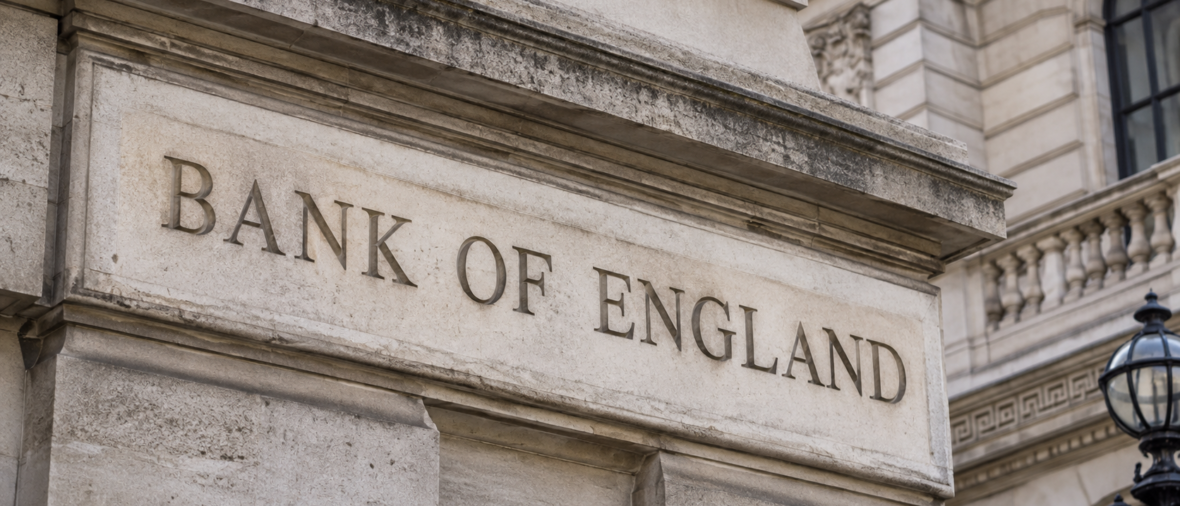
Treasury Committee opens evidence-gathering on the 30-year-old framework, asking whether the Bank’s remit still serves an economy with higher debt and stickier inflation than the one it was designed for
The Treasury Committee has launched a new inquiry examining whether the Bank of England’s operational independence, granted by Gordon Brown in 1997, still fits an economy that looks very different three decades on. The inquiry, titled “Bank of England monetary policy independence at 30: Still fit for purpose?”, opened on 24 September and will take written evidence until 6 November.
The Bank was first given independent control over interest rates in 1997, with quantitative easing and tightening added to its toolkit from 2009. The Committee noted that CPI inflation has averaged 2.5% since independence, against 7.3% between 1967 and 1997, a marked improvement on the pre-independence era. But it also pointed to a far larger national debt than existed three decades ago, and to inflation running above the Bank’s 2% target for most of the past five years, as reasons to ask whether the current framework still holds up.
Dame Meg Hillier, chair of the Treasury Committee, said: “The country and the world has changed significantly since the Bank of England was given the powers to set monetary policy independently by Gordon Brown. The key questions are, how is it working and is the current system fit-for-purpose 30 years later? Our Committee offers one of the most important and direct avenues for publicly scrutinising the Bank’s performance, so I’d strongly encourage all of those with informed views and research to get in touch. It’s time for a robust debate about how the Bank of England’s independence is working.”
The Committee’s terms of reference cover substantial ground: whether the Bank has used its independence effectively and how its record compares internationally; whether quantitative easing and tightening have enhanced or diminished the case for independence; whether the Monetary Policy Committee’s remit and range of expertise remain fit for purpose; whether the Bank, the Treasury and the Debt Management Office collaborate effectively; and whether existing mechanisms strike the right balance between safeguarding independence and holding the Bank accountable, including over appointments to its executive and the MPC. The inquiry will also examine how the Bank has responded to the 2024 Bernanke review of its forecasting and communications, and whether the Bank’s other functions, including financial stability, sit well alongside its monetary policy role.
The inquiry follows a similar exercise by the House of Lords Economic Affairs Committee in 2023, which concluded independence had served the UK well overall but recommended changes to improve accountability and communication, and comes as the Treasury Committee separately reviews the role of the Office for Budget Responsibility.
The timing gives the inquiry an unusually live backdrop. It lands weeks after the Bank held Bank Rate at 3.75% while warning a rate rise is becoming more likely, with inflation forecast to approach 4% on the back of Middle East-driven energy costs, and a three-way MPC split over whether to act immediately. For UK wealth managers, an inquiry probing the credibility and accountability of the framework that sets interest rate policy is unlikely to move markets on its own, but it adds a layer of political scrutiny to a monetary policy debate that is already more contested than at any point in recent years, and is worth watching as evidence sessions get under way over the coming months.